Has the buzz around holistic health trends left you wondering if red light therapy is scientifically proven or just another healthcare innovation with more hype than substance?
In this article, we’ll explore the science behind red light therapy. We’ll separate the marketing fluff from the real scientific evidence. Red light therapy claims to improve skin health and mental well-being. But is it as effective as people say? We’ll look into how it works, its benefits, risks, and the studies that support it.
By the end, you’ll know if adding red light therapy to your wellness routine is a good idea.
Quick Recommendation: Our blog covers the benefits of red light therapy. If you are looking for a modern red light therapy device that is safe and effective, we recommend the Light Therapy Facial-X7 or the Light Therapy X.
What is Red Light Therapy?
Red Light Therapy (RLT) is a treatment that uses red and near-infrared light to help the body heal. It was once known as low-level laser therapy (LLLT) or photobiomodulation. Now, it’s a popular choice for at-home use.

The history of RLT started with low-level laser therapy for skin and muscle issues. As technology improved, it became known as photobiomodulation. Now, RLT is used for skin care, pain relief, and even hair growth.
What makes RLT stand out is that it’s non-invasive. People can use it at home or in clinics. It offers many benefits with little risk. While more studies are needed, the current evidence is promising.
How Red Light Therapy Works
Red light therapy works by using special wavelengths that go deep into your skin. These wavelengths reach the mitochondria in your cells. Mitochondria are like the powerhouses of your cells, helping them make energy.
When your cells get red light, their mitochondria work better. This means they make more ATP, which is key for your cells to function well.

ATP is crucial for keeping your cells energized and working right. Red light therapy boosts this energy by improving how mitochondria work. This helps your body heal faster and can make your skin look better.
Red light therapy uses special wavelengths to increase ATP production. This helps your cells work better, making it useful for many health needs.
Health Benefits of Red Light Therapy
Red Light Therapy (RLT) offers many health benefits backed by science. It’s a non-invasive way to find pain relief. RLT goes deep into the skin to ease pain, helping those with chronic pain.
RLT is also great at reducing inflammation. Inflammation causes many health issues. RLT fights it, leading to better health and a better life.
It also boosts circulation. Good blood flow is key for heart health and quick recovery. It helps wounds heal faster, making RLT popular for cuts, burns, and scars.
RLT also helps with muscle recovery and might even fight aging. Athletes use it to heal faster. Others see it as a way to reduce wrinkles and make skin look younger. While more research is needed, current studies are promising.

Red Light Therapy for Skin Conditions
Red Light Therapy (RLT) is getting a lot of attention for treating skin issues. It’s a non-invasive way to fight acne. The red light goes deep into the skin, killing bacteria and reducing swelling.
RLT is great for boosting collagen. More collagen means better skin tone and less wrinkles. It’s a favorite for those wanting to look younger.
RLT is also good for eczema. It reduces inflammation and soothes the skin. Regular use can help control eczema symptoms.
It’s also useful for psoriasis. RLT can lessen scaling and inflammation. This makes life easier for those with psoriasis.

Studies back up RLT’s benefits for the skin. It’s a natural way to improve your skin health. If you’re dealing with acne, want to boost collagen, need eczema relief, or manage psoriasis, RLT might be what you need.
Red Light Therapy for Mental Health
Red light therapy is becoming more popular for mental health. It has scientific support and helps with conditions like seasonal affective disorder. This disorder happens when we get less sunlight, affecting our mood and energy.
Red light therapy also boosts mood. It increases serotonin, the happiness hormone. This can lead to better emotional balance and a more positive outlook.
It also improves sleep quality. Red light helps set our body’s internal clock. This makes it easier to fall and stay asleep. Good sleep is key for our mental and physical health.
Moreover, red light therapy enhances cognitive function. Better sleep means better brain performance. This improves memory, focus, and problem-solving skills. Enhanced brain function boosts productivity and mental sharpness.
Quick Recommendation: Our blog covers the benefits of red light therapy. If you are looking for a modern red light therapy device that is safe and effective, we recommend the Light Therapy Facial-X7 or the Light Therapy X.
Comparing Red Light Therapy Devices
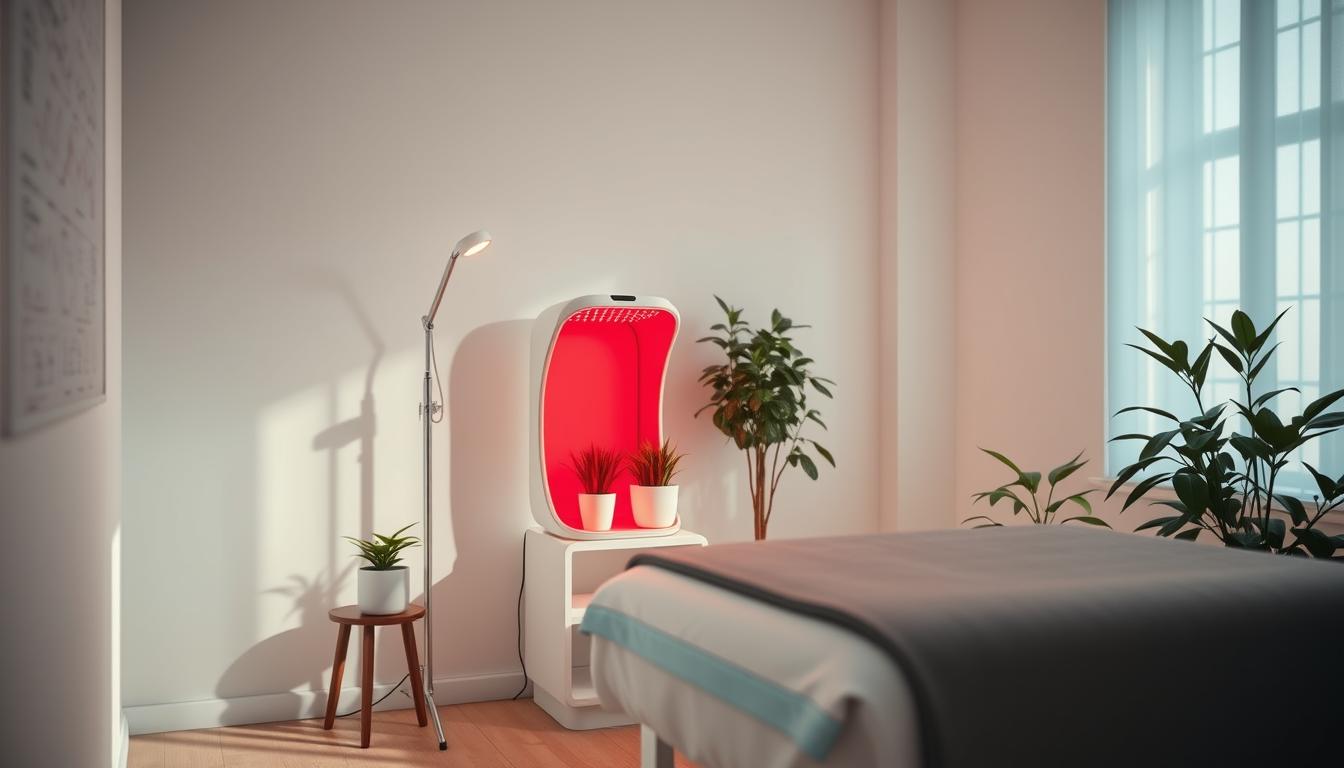
Red Light Therapy (RLT) devices vary in form, meeting different needs and preferences. When comparing at-home RLT units and professional RLT equipment, several factors come into play. These include treatment parameters, FDA clearances, and more.
At-home RLT units are easy to use and portable. They come in handheld models and smaller panels. These devices are effective for many treatments, despite having less power density than professional units. Look for devices with wavelengths between 600 to 900 nanometers for the best results.
Professional RLT equipment is used in clinics and has higher power density. It also covers larger areas. These devices require professional use and offer more treatment options. They also have FDA clearances, showing they meet high safety and effectiveness standards.
When picking a Red Light Therapy device, think about what you need. Check the power density, wavelength range, and treatment time for effectiveness. Whether you choose at-home units or professional equipment, make sure it has FDA clearances for safety and reliability.
Risks and Side Effects of Red Light Therapy
Red light therapy (RLT) is mostly safe, but it’s important to know the risks and side effects. Following the right treatment steps can help avoid problems. It’s key to be aware of what might happen.
Eye safety is a big deal. The light is very strong, so wearing eye protection is a must. Looking directly at the light can hurt your eyes.
Skin sensitivity is another issue. If your skin is easily irritated or you have skin problems, you might get redness or itchiness. Doing a patch test first can show if you’ll react badly.
Knowing what treatment contraindications are is crucial. Not everyone can use red light therapy. If you have health issues or take certain medicines, talk to a doctor first. Conditions like photosensitivity or lupus, and some medicines, can make side effects worse.
Finally, make sure the red light therapy device you use meets regulatory standards. Look for FDA approval. This means the device has been tested thoroughly and is safe and works well.
Research Studies on Red Light Therapy
Red light therapy (RLT) is getting more attention for its potential benefits. But, we need solid scientific research to know if it really works. Many clinical trials have looked into its effectiveness.
These trials are key in phototherapy research. They check how well RLT works for different issues, like skin problems and mental health.
In recent years, more research has been done. Many reviews have been published in top journals. These reviews summarize the trials and give a balanced view of RLT’s effects.
Studies show RLT can help in many ways. But, we need more research to know its full potential.
Red light therapy is used for many conditions. It helps with wound healing and reducing inflammation, among others. Clinical trials have shown its wide range of benefits.
It’s important to keep up with new research and reviews. This way, you can make informed choices about using RLT.
The science on red light therapy is still growing. But, the research so far is promising. As more trials are done, we’ll learn more about its benefits.
Costs and Accessibility
Thinking about Red Light Therapy? The cost is a big factor. Prices differ a lot. Visiting treatment centers can cost $25 to $200 per session. Buying a device for home use can cost $100 to over $1,000.
Insurance coverage for Red Light Therapy varies. Some plans might cover it if it’s for a medical reason. But many see it as cosmetic and don’t cover it. Always check with your insurance to see what’s covered.
Even with upfront costs, many find Red Light Therapy worth it. It can save money by avoiding more expensive treatments. Treatment centers offer professional help, while home devices are convenient and can save money over time.
Conclusion
Exploring Red Light Therapy (RLT) means looking at the science and marketing claims. This article has given you a detailed look at its benefits and things to consider. It covers everything from better skin and mental health to picking the right device.
RLT offers many therapeutic options for your wellness journey. It’s great for tackling health issues or trying new wellness practices. Knowing how it works and its scientific support helps you choose wisely. Always weigh the good against the possible downsides.
In short, Red Light Therapy is promising but needs careful consideration. Stay informed and cautious to make health choices based on solid research. Let your journey with RLT be guided by knowledge and a focus on your well-being.
Quick Recommendation: Our blog covers the benefits of red light therapy. If you are looking for a modern red light therapy device that is safe and effective, we recommend the Light Therapy Facial-X7 or the Light Therapy X.
Thank you for your sharing. I am worried that I lack creative ideas. It is your article that makes me full of hope. Thank you. But, I have a question, can you help me?