Ever thought if what you eat could make you look younger? Many people wonder about this. Nutrition and aging are closely linked, interesting both scientists and health fans. Harvard Health Publishing and the National Institute on Aging believe your diet could be key to living longer and staying healthy.
An anti-aging diet is more than just looking young. It’s about keeping your cells healthy and living longer. Some foods help with this. They are full of nutrients that support your body’s health, slowing down aging. This is pretty interesting, right?
Let’s look into the science behind it. Studies from the American Journal of Clinical Nutrition show how what we eat affects aging. Foods with antioxidants and omega-3 fatty acids can greatly improve your health. This makes a strong case for eating right to live longer.
Are you curious about how eating right can fight aging? Stay with us as we learn about the key foods in an anti-aging diet. We’ll see how they help you live a longer, healthier life.
Quick Recommendation: Our blog takes you through the importance of nutrition when it comes to anti-aging. If you're interested in exploring the subject of anti-aging more comprehensively, we recommend the Anti-Aging Hacks eBook.
The Importance of a Balanced Diet
A balanced diet is key to staying young and full of life. It must have the right amount of carbs, proteins, fats, vitamins, and minerals. This mix keeps your organs healthy and fights aging.

Healthy eating habits boost your overall health. Eating a variety of fruits, veggies, lean proteins, whole grains, and healthy fats is good. These foods give you the nutrients you need and help prevent aging.
The USDA’s Dietary Guidelines for Americans offer great advice. They highlight how eating a variety of nutrient-rich foods is beneficial. The World Health Organization also stresses the need for balanced nutrition for better health.
Studies prove that eating a variety of foods leads to better health and longer life. By following these tips, you can enjoy many benefits. You’ll stay young and full of energy.
Antioxidants and Their Role in Anti-Aging
Antioxidants are key in fighting aging signs. They stop free radicals, unstable molecules that harm skin and speed up aging. Free radicals come from our body’s processes and things like pollution and UV rays.

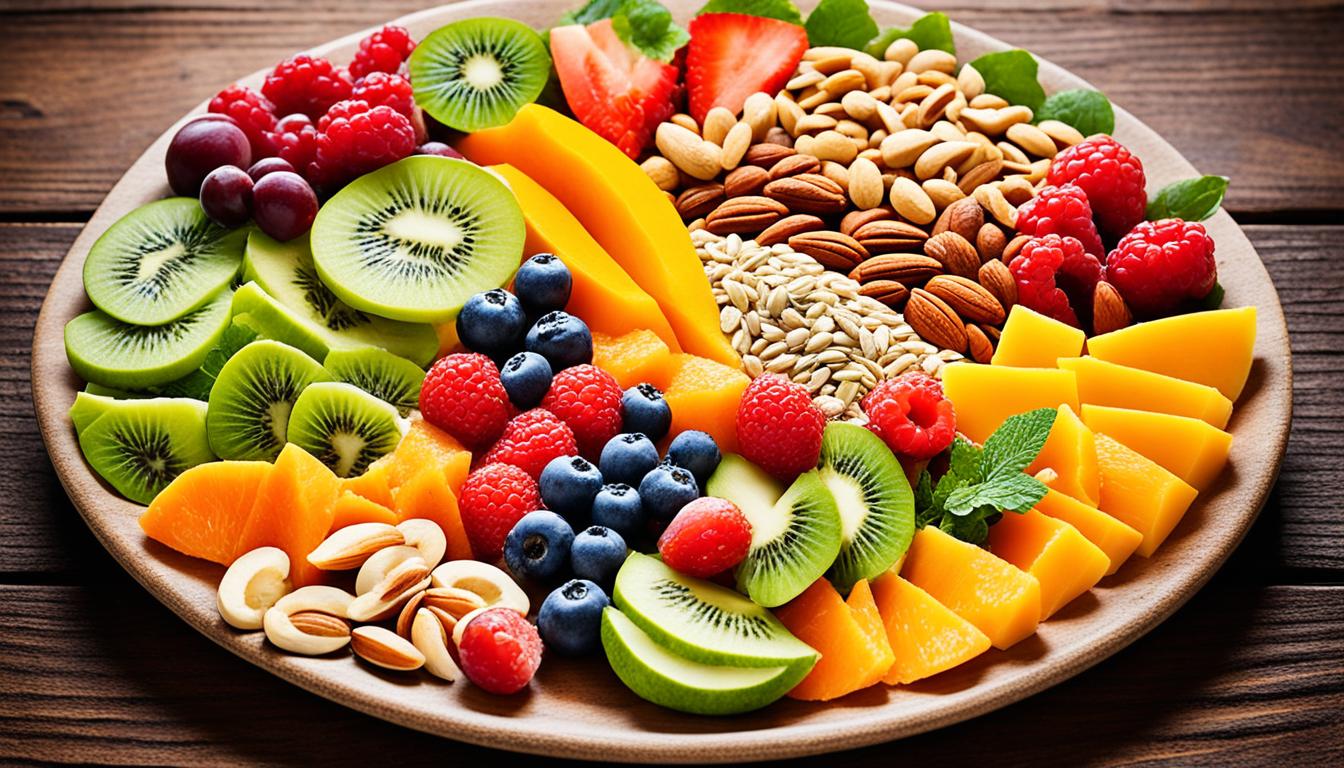
Eating foods high in antioxidants is great for your skin and health. Foods like berries, leafy greens, nuts, and seeds are full of these protective compounds. Studies show vitamins C and E in these foods help keep skin young and reduce wrinkles.
More antioxidants in your diet can lower the risk of age-related diseases. A study found antioxidants help prevent Alzheimer’s and Parkinson’s. The American Heart Association says eating foods with antioxidants can keep your heart healthy and cut down heart disease risk.
It’s important to eat a mix of antioxidants for the best protection. No one antioxidant can do it all; a mix is best. Eating a variety of antioxidant-rich foods daily gives you the most protection.
Omega-3 Fatty Acids for Skin Health
Adding omega-3 fatty acids to your diet can greatly improve your skin health. They help keep your skin elastic and hydrated. These fats are strong anti-aging nutrients. They protect your skin from sun damage and reduce inflammation that can cause early aging signs.
A study in The Journal of Clinical Investigation found that eating omega-3 regularly makes skin more elastic and looks better. Dermatology research shows these fats fight dry skin and help you look younger.
To increase your omega-3 intake, eat foods like salmon, walnuts, flaxseeds, and chia seeds. These foods are full of omega-3 and can be added to your meals easily. If eating enough omega-3 is hard, supplements are also an option. The Academy of Nutrition and Dietetics says a balanced diet is best, but supplements can help too.
Studies today show omega-3 fatty acids are key for keeping skin elastic and young-looking. By choosing your foods wisely, you can use omega-3 to keep your skin glowing and young.

Hydration and Its Impact on Aging
Proper hydration is key for good health, and it’s also vital for fighting aging. As you get older, staying hydrated is more important. It helps keep your skin looking young and healthy.

The US National Academies of Sciences suggest men drink about 3.7 liters and women about 2.7 liters of water each day. Your needs can change based on your activity level and where you live. Drinking enough water is good for your skin and helps your body get rid of toxins. This can make you look younger.
A study in Skin Research and Technology found that drinking more water makes your skin more hydrated, elastic, and look better. Drinking water does more than just keep you hydrated. It helps your skin stay healthy and strong.
If you’re not drinking enough water, try eating foods with a lot of water like cucumbers, watermelon, and oranges. Also, keep a reusable water bottle with you to remind you to drink more. These simple steps can help you keep your skin hydrated and looking great.
Quick Recommendation: Our blog takes you through the importance of nutrition when it comes to anti-aging. If you're interested in exploring the subject of anti-aging more comprehensively, we recommend the Anti-Aging Hacks eBook.
Vitamins and Minerals Essential for Youthful Skin
Caring for your skin starts with getting enough skin-supporting vitamins and minerals. These nutrients are key for a youthful look and good skin health.

Vitamin C is a top vitamin for skin care. It’s a strong antioxidant that helps make collagen, which keeps skin elastic and firm. You can get it from citrus fruits, strawberries, and bell peppers. Sometimes, you might need supplements to get enough.
Vitamin E is also vital for skin health. It shields skin from damage and helps repair it. You can find it in nuts, seeds, and leafy greens. Getting enough of this vitamin keeps your skin looking young.
Selenium is a mineral that’s often overlooked. It guards against skin damage and reduces inflammation. You can get selenium from Brazil nuts, fish, and eggs.
Zinc is key for skin repair and keeping the skin barrier strong. It helps prevent acne and keeps skin healthy. You can find zinc in meats, beans, and seeds. If you’re not getting enough from food, supplements can help.
Studies from the American Academy of Dermatology, Clinics in Dermatology, and the Journal of Advanced Research show that lacking these nutrients can speed up skin aging. Fixing even small shortages can make a big difference in your skin’s look and health.
To look young, add these vitamins and minerals to your diet. Eat citrus fruits for vitamin C, nuts for vitamin E, Brazil nuts for selenium, and meats for zinc. If you’re not getting enough from food, supplements can help. But always talk to a healthcare provider before starting any supplements.
Inflammation and Aging: The Connection
Understanding how inflammation and aging are linked is key to preventing aging. Chronic inflammation speeds up aging and leads to many diseases as we get older. This includes arthritis and heart diseases, harming our bodies.
Eating an anti-inflammatory diet can help reduce inflammation and help you live longer. Foods full of antioxidants, omega-3 fatty acids, and phytochemicals are great choices. The Mediterranean diet is known for fighting inflammation and has shown good results in studies.
Your gut health is crucial in controlling inflammation. Eating foods that fight inflammation can make your gut healthier. Foods like yogurt and fruits and vegetables are good for your gut.
Studies from Harvard Medical School stress the need to manage inflammation to prevent aging. The Journal of Gerontology has also found links between inflammation and diseases that come with age. Experts say eating an anti-inflammatory diet can improve your life and health, playing a big part in staying healthy.
Glycation and Sugar Intake
Glycation is when sugar molecules attach to proteins or fats without an enzyme’s control. This process makes advanced glycation end products (AGEs), which harm your body’s tissues. They affect your skin, speeding up sugar-related aging.
Too much sugar makes glycation worse, causing wrinkles, sagging skin, and loss of elasticity. Studies show that eating less sugar can slow down aging. The Journal of the American Dietetic Association found that high-sugar diets increase AGEs, linking sugar to skin aging.
To fight sugar-related aging, it’s key to eat less sugar and choose foods with less sugar. Foods high in fiber, proteins, and healthy fats are good choices. Research shows that eating this way can lower AGEs and improve skin health. The British Journal of Dermatology agrees, saying dietary sugars harm skin aging.
Using these strategies can keep you looking young and improve your health. By being mindful of what you eat, you can slow down glycation and its bad effects on your skin. This way, you can age gracefully.
The Benefits of Phytochemicals
Phytochemicals are plant-based nutrients that fight aging. They are found in foods like berries, onions, and teas. These include flavonoids, carotenoids, and polyphenols.
Flavonoids are in berries, onions, and teas. They fight free radicals that harm skin cells and speed up aging. Carotenoids are in carrots, sweet potatoes, and tomatoes. They protect against UV rays and keep skin healthy.
Polyphenols are also anti-aging compounds. You can find them in grapes, apples, and dark chocolate. The Journal of Nutritional Biochemistry says polyphenols reduce inflammation and protect cells from damage. This could help you live longer.
Studies show these nutrients work well. American Journal of Clinical Nutrition talks about how flavonoids help fight aging signs. Nutrients journal explains how carotenoids keep skin young and strong.
Adding foods rich in phytochemicals to your diet helps your skin and slows aging. Next time you’re shopping, think about these powerful nutrients for your health.
Conclusion
Understanding how nutrition affects aging has been a journey. We’ve looked at how eating right can help you look and feel younger. Antioxidants, omega-3 fatty acids, and staying hydrated are key to a youthful look and better health.
Adding these tips to your daily life is more than just about looking good. It’s about living a healthy life for the long term. Foods full of nutrients help your skin and body, fight inflammation, and slow down aging. These changes can lead to a more lively and energetic life.
Now, it’s time to put this knowledge into action. Start eating healthier every day to make the most of nutrition. The benefits go beyond just looking good. They improve your life quality. With every healthy choice, you’re working towards a future full of energy. Start now and see the amazing changes that await you.
Quick Recommendation: Our blog takes you through the importance of nutrition when it comes to anti-aging. If you're interested in exploring the subject of anti-aging more comprehensively, we recommend the Anti-Aging Hacks eBook.
I am blown away by the depth and detail in your posts Keep up the excellent work and thank you for sharing your knowledge with us
Love this blog! The content is always so relevant and insightful, keep up the great work!
Your words are powerful and have the ability to make a real difference in people’s lives Keep using your voice to spread positivity and knowledge
Your blog always leaves me feeling uplifted and inspired Thank you for consistently delivering high-quality content
I appreciate your creativity and the effort you put into every post. Keep up the great work!