
What if changing your diet could boost your health, cut down on pollution, and help animals all at once?
Welcome to veganism. More people are seeing the benefits and choosing to go vegan. The Vegan Society says vegan numbers are growing fast, with more people joining every year. But what does it mean to switch to a plant-based diet, and why is it so important?
Going vegan is good for you, too. Studies from NutritionFacts.org show it can lower heart disease risk and improve health. It’s also great for the planet. The United Nations says vegan diets help the environment by reducing pollution and saving water.
In this guide, we’ll look at the reasons and how-tos of going vegan. We’ll clear up myths and give you simple steps to start. Are you ready to start a healthier, greener life?
Quick Recommendation: Our blog takes you through how to transition to a plant-based lifestyle. If you are looking to dive deeper into veganism, we recommend the Vegan Diet EBook .
Understanding Veganism
Veganism is more than just what we eat. It’s about ethics, the environment, and health. Ethical veganism fights for animal rights, stopping animal suffering. Groups like People for the Ethical Treatment of Animals (PETA) work hard to teach us about animal rights, aiming for a kinder world.

Environmental veganism aims to cut down on our carbon footprint. The Environmental Protection Agency (EPA) says animal farming harms our planet. By eating plants, we can help save our environment and keep it healthy.
Health-wise, veganism is good for us. The Physicians Committee for Responsible Medicine says a plant-based diet is full of good stuff. It can help prevent serious diseases like heart disease and cancer. This shows how important our diet is for our health.
Important people like Donald Watson have shaped veganism. He started the Vegan Society and came up with the word “vegan.” Their work shows veganism is more than a trend. It’s a way to live with care and health.
Assessing Your Diet
Before you start a vegan lifestyle, it’s key to know what you eat now. Do a dietary audit to see what plant-based foods you already eat. Find out which foods you’ll need to replace with vegan options. This first step helps you smoothly switch to vegan nutrition.
For a balanced vegan diet, make sure you get all the nutrients you need. The Academy of Nutrition and Dietetics has great info on vegan nutrition. They talk about proteins, vitamins, and minerals you need to stay healthy. You can find proteins in legumes, tofu, and tempeh. Sometimes, you might need to take supplements for vitamins like B12.

Reading food labels is very important. Look out for hidden non-vegan ingredients like gelatin, whey, and casein. Websites like MyFoodData and USDA FoodData Central can help you spot these. By checking your food choices and making changes, you’re ready for a successful vegan diet.
Starting Slow: Gradual Changes
Starting your vegan journey can be thrilling, but it’s key to do it at your own pace. Begin with small steps, like having meatless Mondays. This lets you try new vegan recipes without feeling stressed.
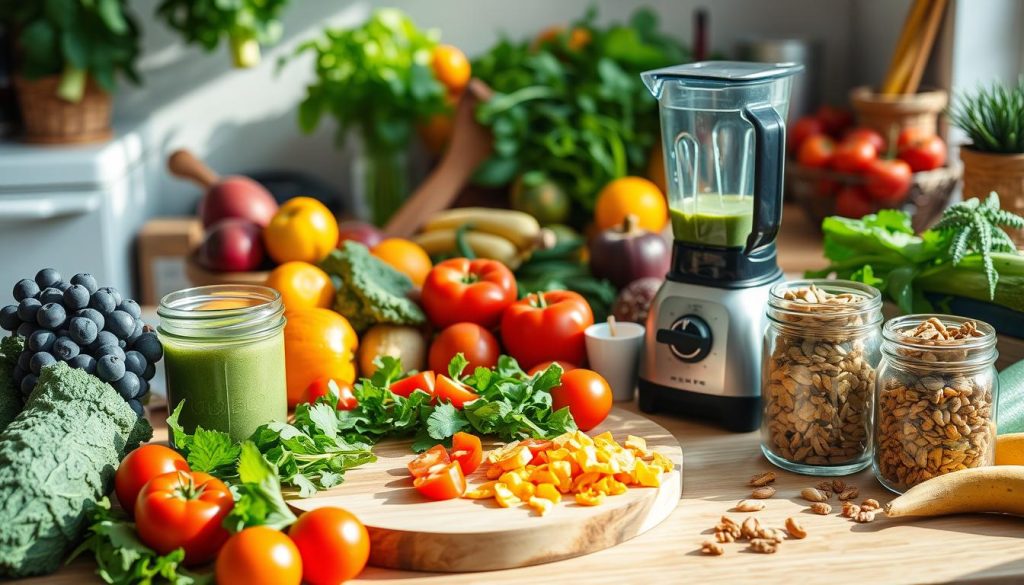
Experts at Harvard Medical School suggest slowly replacing animal products with plant-based ones. This helps your body get used to eating more veggies and grains. As you get more comfortable, you can stop using dairy and eggs, and eventually, all animal products.
Planning your vegan meals is vital to get all the nutrients you need. The American Dietetic Association recommends eating a variety of whole foods. Make sure to have beans, lentils, tofu, and quinoa on hand for protein and fiber. Don’t forget to include leafy greens for vitamins and minerals.
Cravings are normal during this time. Veganuary says using healthier vegan options can help you adjust. For cheese cravings, try nut-based cheeses. For meat cravings, look into plant-based meats made from soy or pea protein.
By starting with small changes and planning your meals, you’ll find veganism easier and more rewarding.
Stocking Your Pantry
Starting a vegan diet is easier with a well-stocked pantry. Fill it with grains, legumes, seeds, and nuts. Quinoa, brown rice, lentils, chickpeas, chia seeds, and almonds are great choices. They’re versatile and full of nutrients.
Fresh fruits and veggies are key. But, also keep items like sweet potatoes, butternut squash, and kale on hand. They last longer and make meal planning simpler. Mix fresh and shelf-stable items in your pantry.
Always check labels to make sure products are vegan. Look for brands like Whole Foods Market and Thrive Market. Apps like HappyCow can also help find vegan products and places to eat.
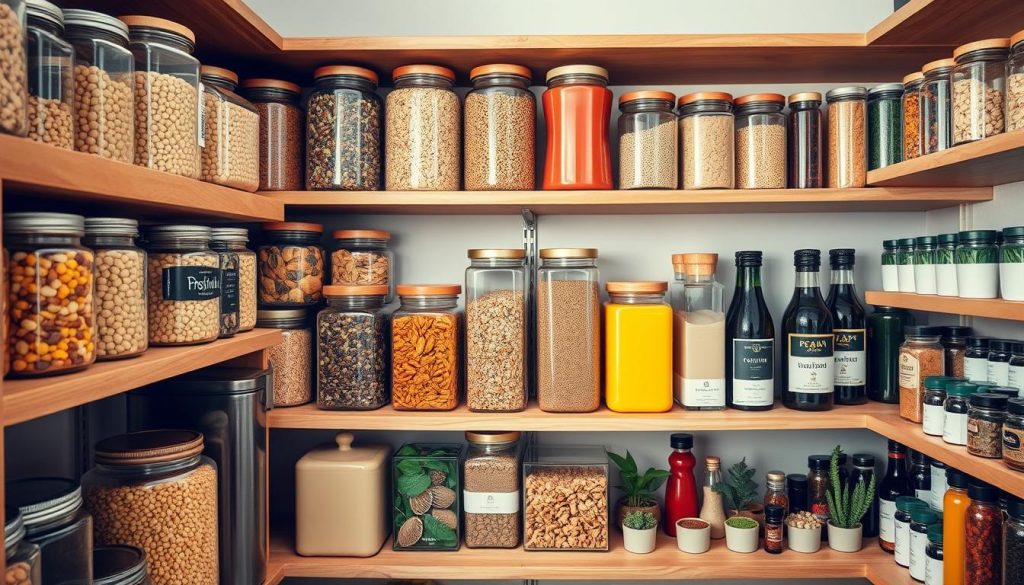
With these essentials and the right tools, you’ll enjoy a balanced vegan diet. A well-thought-out pantry means you’re always ready to make tasty, healthy meals.
Veganism on a Budget
Starting a vegan lifestyle doesn’t have to cost a lot. It’s possible to eat well without spending a lot. Begin by buying in bulk. Items like beans, grains, and lentils are cheap and versatile.
Look for seasonal produce. The USDA Seasonal Produce Guide helps find what’s in season. This way, you get fresh, affordable fruits and veggies.
Cooking at home is another way to save. Pre-made vegan foods can be pricey. Try making dishes like stir-fries, soups, or casseroles. You’ll save money and control what you eat.
Meat-based meals are often more expensive than vegan ones. The Bureau of Labor Statistics shows meat prices keep going up. But, lentils and chickpeas are cheaper and just as nutritious.
Use budgeting apps to help. Tools like Plant Based on a Budget track your spending. They also offer affordable vegan recipes. This way, you can eat well without breaking the bank.
Quick Recommendation: Our blog takes you through how to transition to a plant-based lifestyle. If you are looking to dive deeper into veganism, we recommend the Vegan Diet EBook .
Eating Out as a Vegan
Starting your vegan dining journey might seem tough. But, with more vegan-friendly restaurants popping up, eating out is getting fun. The first step is finding places that offer vegan food.
Use websites and apps like HappyCow, Yelp, and The Infatuation to find vegan spots. They have reviews, ratings, and menu details. This makes picking a place to eat easier.
When you’re at a restaurant, ask your server about ingredients and how dishes are made. Ask if something contains dairy or eggs, or if it can be made without butter. Many places can adjust their dishes to fit your vegan diet.
More and more places, like Chipotle and Taco Bell, now have vegan options. Even traditional steakhouses are adding plant-based dishes. This means you can enjoy vegan food without losing out on taste or variety.
Getting better at choosing vegan options takes time. Look for “plant-based” or “dairy-free” labels on menus. This helps you find vegan dishes quickly and makes eating out more fun.
Social Situations and Veganism
Being a vegan in social situations can be tough, but it’s doable. When you go to events, talking openly is key. Tell the host you’re vegan early so they can plan vegan food for you. This makes your social life easier and shows you respect their efforts.
Dealing with criticism is part of being vegan, especially in groups. Stay calm and share your vegan story. Explain why you chose veganism and the good changes it’s brought to your life. Teaching others without being pushy is important for good vegan manners.
Inviting non-vegan friends and family to vegan events can bring you closer. Bring a vegan dish to share, showing vegan food is tasty. This helps handle criticism and sparks curiosity, making everyone more open-minded.
Joining online vegan groups like Reddit’s Vegan Community or local meetups on Meetup can be helpful. It connects you with others who get it, offering support and ideas for being a good vegan in social settings.
Health and Nutrition
Choosing a vegan lifestyle has many health perks. The American Heart Association says it can cut down heart disease, high blood pressure, and stroke risks. These benefits come from eating lots of plant-based foods, like fiber, vitamins, and minerals.
But, vegans might miss out on some nutrients. They might not get enough vitamins B12 and D, iron, calcium, and omega-3 fatty acids. The American Journal of Clinical Nutrition says these gaps can be filled with fortified foods and supplements if needed.
To get all the nutrients you need, eat foods like legumes, nuts, seeds, whole grains, and lots of fruits and veggies. The Vegan Society’s Nutritional Guide recommends adding nutrient-rich snacks and meals to your diet.
In the end, a well-planned vegan diet is full of health benefits. It’s important to choose your foods wisely and maybe add supplements. This way, you can live a healthy, balanced vegan life.
Cooking at Home
Starting a vegan journey at home can be exciting. Begin with easy vegan recipes and grow your cooking skills. Use blenders for smoothies, food processors for nut butters, and sharp knives for chopping.
Think about taking a cooking class like the “Forks Over Knives” Course. Also, check out “The Vegan Stoner Cookbook” for simple recipes. Or, look at Minimalist Baker Recipes for meal prep ideas. These resources help make vegan cooking fun and rewarding.
With creative cooking and meal prep, vegan meals at home become enjoyable. The more you try, the more you’ll love plant-based foods. So, get your kitchen tools ready, try new recipes, and have fun cooking at home!
Conclusion
Your journey into plant-based living has been well-covered in this article. Choosing veganism is more than just a diet; it’s a way of life. It’s good for you, the planet, and animals.
We’ve shown you how to start and grow in your vegan path. From learning the basics to stocking your kitchen, every step matters. We’ve also given you tips for eating out, handling social events, and keeping your diet balanced. Cooking at home can be fun and rewarding, making your vegan journey richer.
Choosing veganism has big benefits that go beyond your own health. Vegan Outreach says it cuts down on harm to the environment. The World Wildlife Fund and the United Nations Environment Programme agree, saying it helps save nature and fight climate change.
Your choice to live sustainably is a strong message. Keep learning, connect with other vegans, and know you’re making a difference. Every little change you make helps create a better world for everyone.
Quick Recommendation: Our blog takes you through how to transition to a plant-based lifestyle. If you are looking to dive deeper into veganism, we recommend the Vegan Diet EBook .