

Ever noticed your toenails becoming thick, discolored, and uncomfortable? It might be due to nail fungal infections, also known as onychomycosis. Podiatric health experts stress the need to spot early signs to avoid discomfort and serious issues. Let’s explore the basics of nail fungus, its types, and why noticing nail changes is crucial.
Quick Recommendation: Our blog takes you through the causes, symptoms, and early detection of nail fungus. If you are looking for a solution to your nail fungus, we recommend Metanail.
Understanding Nail Fungus
Nail fungus, also known as onychomycosis, starts as a white or yellow spot under your nail. It can make nails thick, discolored, and prone to cracking. Dermatophytes, a type of fungus, are usually to blame. Yeasts and molds can also cause these infections.
Spotting the signs of nail fungus early is key. It helps you get treatment quickly and avoid bigger problems.
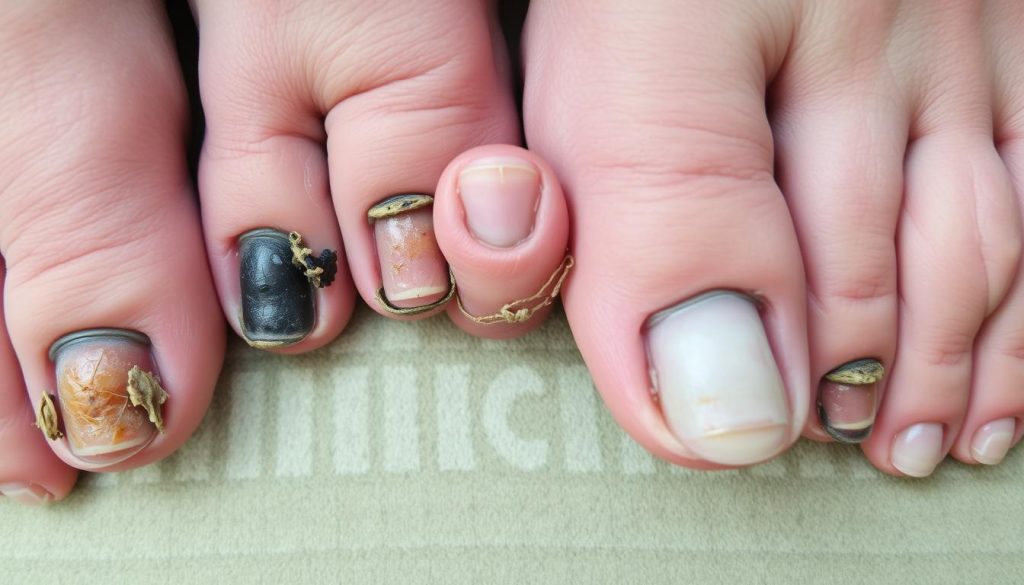
Signs of nail fungus include brittle, crumbly, or ragged nails. Affected nails might look distorted or have an odd shape. Sometimes, nails can even detach from the nail bed, a condition called onycholysis.
Fungal nail infections can harm your nail’s look and your foot’s health. They can lead to athlete’s foot and skin infections.
Knowing the signs of nail fungus and the role of dermatophytes helps you keep your nails healthy. Simple hygiene and proper nail care can lower your risk of getting fungal infections. Stay informed and keep your nails healthy for better overall health.
Common Causes of Nail Fungus
Nail fungus, or onychomycosis, can affect anyone. Knowing the causes of onychomycosis helps in prevention and management. Wet and warm environments, like showers and sweaty shoes, are perfect for fungi.

Poor hygiene increases your risk. Not trimming or cleaning your nails can lead to infections. Sharing nail clippers or shoes with someone with a fungal infection is risky, as contagious fungi can spread easily.
Your health also plays a role. Weakened immune systems, diabetes, or circulatory issues make you more likely to get onychomycosis. Eating well, exercising, and not smoking can help. Even some medications, like steroids, can weaken your immune system.
Finally, nail trauma is a big factor. Frequent manicures and pedicures can cause damage. Using clean tools and avoiding harsh treatments can prevent nail fungus.
Symptoms of Nail Fungus
Nail fungus can sneak up on you, often showing subtle signs that are easy to miss. One of the first signs is nail discoloration. Your toenails or fingernails may turn yellow, white, or brown, spreading quickly if not treated.
Another sign is brittle nails. Healthy nails are strong and smooth. But when fungus strikes, they become fragile, crumbling and breaking easily. They also thicken, making them hard to trim.
Changes in nail shape are another sign. As the infection grows, nails may curl up or down, or show unusual marks. These changes are not only ugly but can also hurt, especially when wearing shoes.
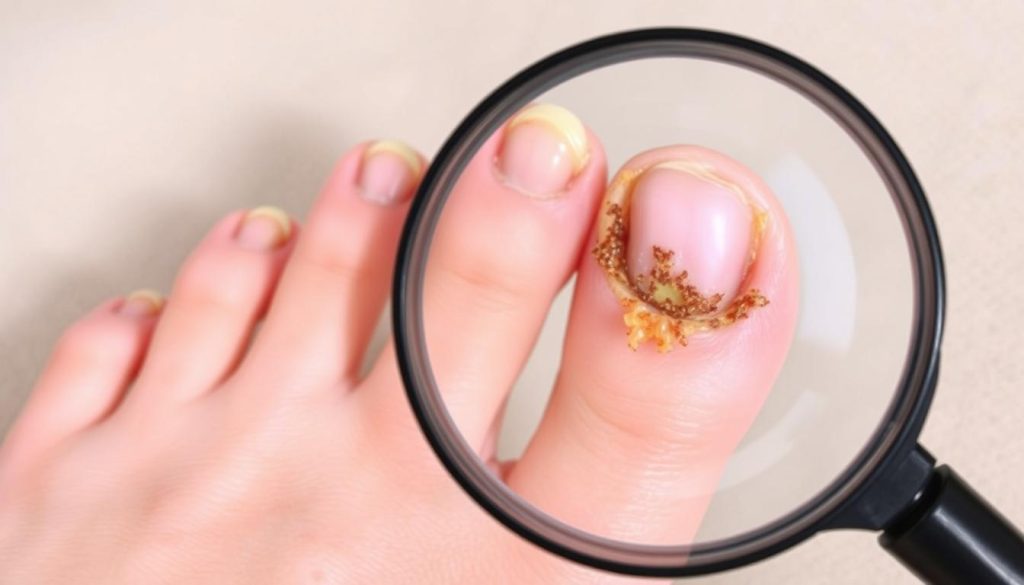
It’s crucial to watch for these symptoms. By noticing nail discoloration, brittle nails, and shape changes, you can catch the fungus early. This way, you can get the right treatment before it gets worse.
How Nail Fungus Develops
Nail fungus starts in warm, moist places. Gyms, public showers, and tight shoes are perfect for it. This is because fungi love these conditions.
The fungus gets into your nail through small cracks or cuts. It then spreads, eating the keratin in your nails. At first, you might see your nail turn color or get thicker.
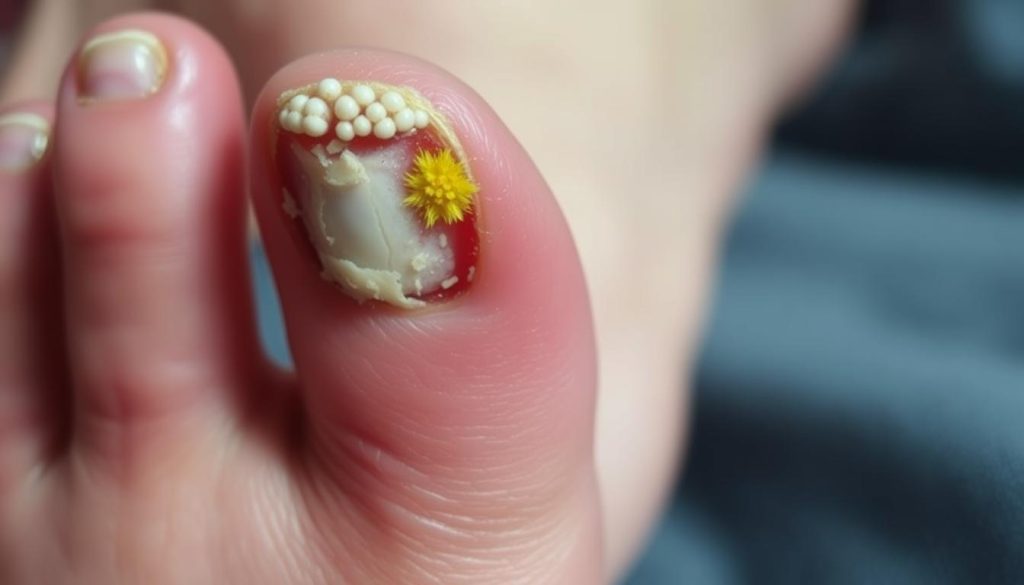
If you don’t treat it, the fungus can get worse. It can go deeper into your nail and spread to other nails or skin. Keeping clean can help stop it, but if it happens, you need to see a doctor.
Early Detection of Nail Fungus
Spotting the early signs of nail fungus is key to managing it well. Knowing what to look for helps you act fast and stop it from getting worse. Look out for small white or yellow spots under the nail tip, thickening, or color changes.
Spotting onychomycosis early is very important. Regularly check your nails for these signs to catch issues early. Watch for brittleness or if the nail lifts from the bed.
If you see any odd changes, don’t wait to get a professional’s opinion. Dermatologists can give expert advice and suggest the right treatment. Learning the early signs helps you keep your nails healthy.
Quick Recommendation: Our blog takes you through the causes, symptoms, and early detection of nail fungus. If you are looking for a solution to your nail fungus, we recommend Metanail.
Diagnosing Nail Fungus
Diagnosing nail fungus starts with noticing symptoms. Look out for changes like discoloration, thickening, or texture issues. Catching it early is crucial for treatment.
Seeing a podiatrist is a first step. They’ll check your nails and ask about your health history. This helps rule out other conditions that might look like nail fungus.
Your podiatrist might suggest lab tests to confirm the fungus. These tests take a small sample from your nail or skin. They’re vital for finding the fungus type and choosing the right treatment.
Getting a precise diagnosis involves a podiatrist visit and lab tests. Knowing the fungus type is essential for effective treatment. This approach helps you get the best results.
Preventive Measures
Prevention is key to avoiding nail fungus. By following a few simple tips, you can lower your risk of getting it.
Keeping your feet clean is essential. Wash them every day with soap and water. Dry them well, especially between the toes. Fungi love moist places, so keep your feet dry.
Choosing the right shoes is also important. Wear shoes that breathe, like leather or canvas. Don’t wear the same shoes every day. Change your socks often, especially if they get wet, to keep your feet dry.
Good nail care is crucial too. Trim your nails straight and file the edges to avoid ingrown nails. Use clean tools to prevent fungus spread.
By following these steps, you can prevent nail fungus and keep your feet healthy. Regular foot care, smart shoe choices, and clean nail tools are key. They help fight off fungal infections.
Treatment Options for Nail Fungus
Dealing with onychomycosis might seem tough at first, but there are many ways to fight it. Antifungal medication is a common choice. You can buy it without a prescription or get it from a doctor. It’s a strong tool against nail fungus.
Some people also try home remedies. These include tea tree oil, vinegar, and garlic. They have natural antifungal powers. While their success can vary, they’re a good option for those who prefer natural treatments.
Changing your lifestyle is also key to beating the fungus. Keeping your feet clean, wearing shoes that breathe, and cutting your nails short helps a lot. These steps work better when you use antifungal meds. Together, they make a strong plan to fight onychomycosis.
Conclusion
Managing nail fungus can be tough, but you can keep your nails healthy with the right steps. Knowing the causes and symptoms is key to catching it early. This way, you can stop it from getting worse.
We’ve talked a lot about keeping an eye on your nails. Learning about nail fungus and how to prevent it is crucial. Simple habits like washing your hands and wearing breathable shoes can help a lot.
If you get nail fungus, don’t worry. There are many ways to treat it, from home remedies to doctor visits. Being proactive and informed helps you fight nail fungus and keep your nails strong. Stay focused on your nail health to beat onychomycosis and have healthy nails.
Quick Recommendation: Our blog takes you through the causes, symptoms, and early detection of nail fungus. If you are looking for a solution to your nail fungus, we recommend Metanail.
Your article helped me a lot, is there any more related content? Thanks!