
Are you tired of waking up with back pain? Wondering if there’s a way to feel better without medication? There is a secret to managing back pain through stretches and exercises. These can change your spinal health and make moving easier.
In this article, we’ll explore stretches and exercises that help with back pain. They also boost your spinal health. By moving right and stretching, you can lessen back pain and move better every day.
Quick Recommendation: Our blog guides you through effective stretches and exercises for back pain relief. If you want to dive into the subject of back pain more comprehensively, we recommend The Back Pain SOS - eBook.
Understanding Back Pain
It’s important to know why back pain happens to manage and prevent it. Back pain can come from many sources. It’s often divided into two main types: acute back injuries and chronic back conditions.
Acute back injuries, like strains and sprains, happen suddenly. They can be caused by wrong movements or lifting heavy things. These injuries can hurt a lot but usually get better with the right care.
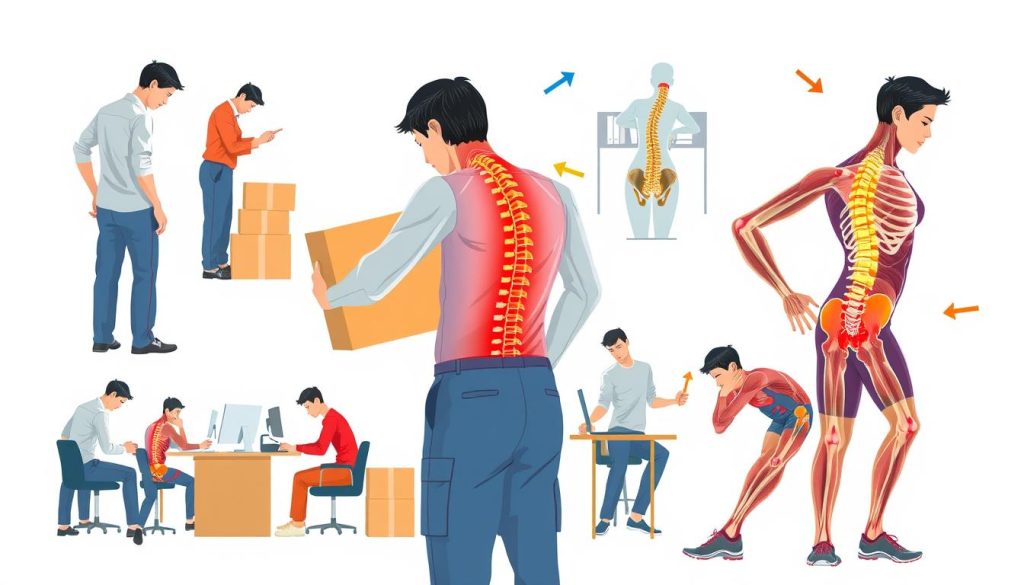
Chronic back conditions, however, develop over time. They are often caused by bad posture, degenerative diseases, or stress on the spine. Common problems include herniated discs, arthritis, and scoliosis. Knowing the causes helps fix the problem.
Keeping your spine healthy is key to feeling good. A healthy spine supports your body, protects your spinal cord, and lets you move easily. Good posture, regular exercise, and using ergonomic tools can help avoid back issues. By focusing on these, you can live without pain.
Importance of Stretching for Back Pain Relief
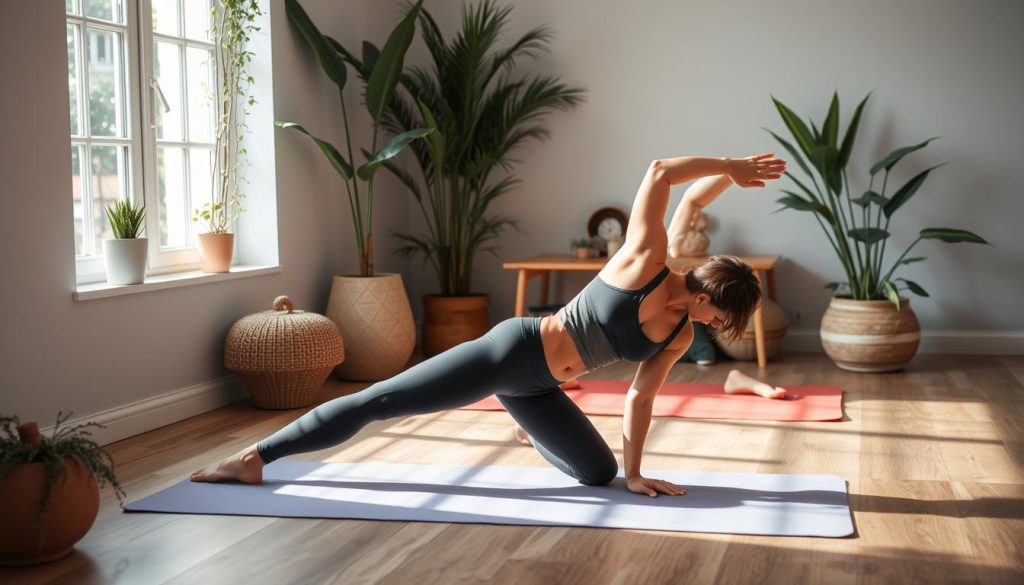
flexibility and improves back health. Regular stretching keeps your muscles flexible and prevents stiffness, which can cause pain.
Stretching also helps reduce muscle tension, a big reason for back pain. Tight muscles put pressure on nerves and joints, leading to pain. Stretching stretches these muscles, easing tension and pain.
Stretching does more than just help with flexibility and tension. It’s also vital for better back health. It helps prevent injuries by improving posture and joint movement. This leads to a healthier spine and fewer back pain episodes.
In short, stretching is crucial for a healthy back. It not only eases muscle tension but also strengthens your back. Adding simple stretches to your day can greatly lower back pain risk and improve your life quality.
Effective Stretches for Lower Back Pain
If you often feel pain in your lower back, adding effective stretches to your routine can help. The Cat-Cow stretch is great for the lumbar region. Start on your hands and knees, arch your back like a cat, then bend low like a cow.
The Child’s Pose is also excellent. It’s simple yet powerful. Begin by kneeling, then sit back on your heels and stretch your arms out. This stretch boosts flexibility and reduces tension.
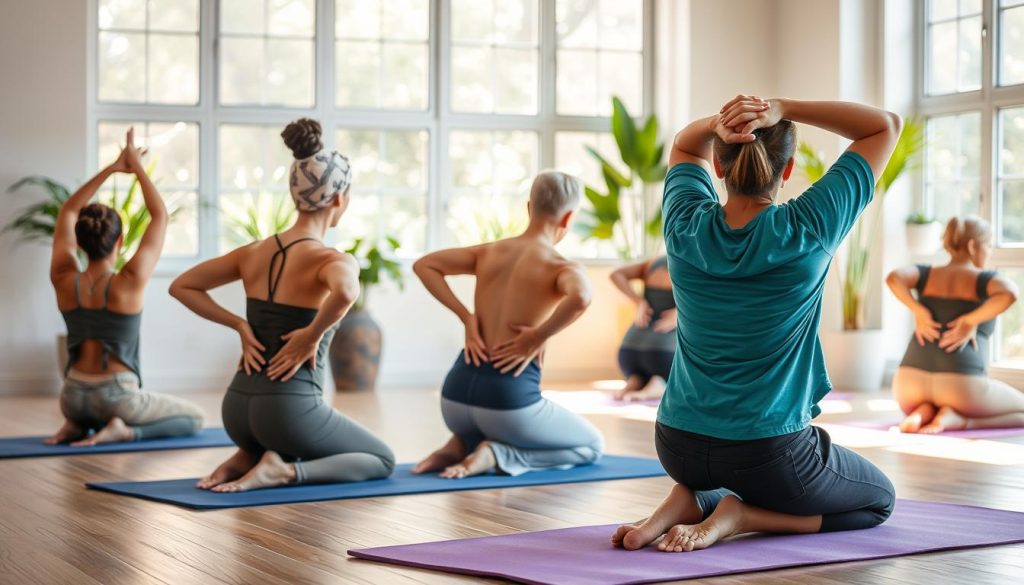
The Supine Twist is key for lower back pain relief. Lie on your back, bring one knee to your chest, and extend the other leg straight. Rotate your knee across your body while keeping your shoulders down. This stretch targets the lumbar region and eases strain.
The Pelvic Tilt is a dynamic stretch. Lie on your back with knees bent and feet flat. Gently tilt your pelvis up, then back down. Repeat several times to strengthen and stretch your lower back.
Regularly doing these stretches can make your lower back more flexible and reduce pain. Always listen to your body and do these stretches carefully for a healthy, pain-free back.
Upper Back Stretches for Pain Relief
Dealing with upper back pain can be tough. But, adding the right thoracic stretches to your routine can help a lot. These stretches not only ease upper back tension but also improve your posture and movement.
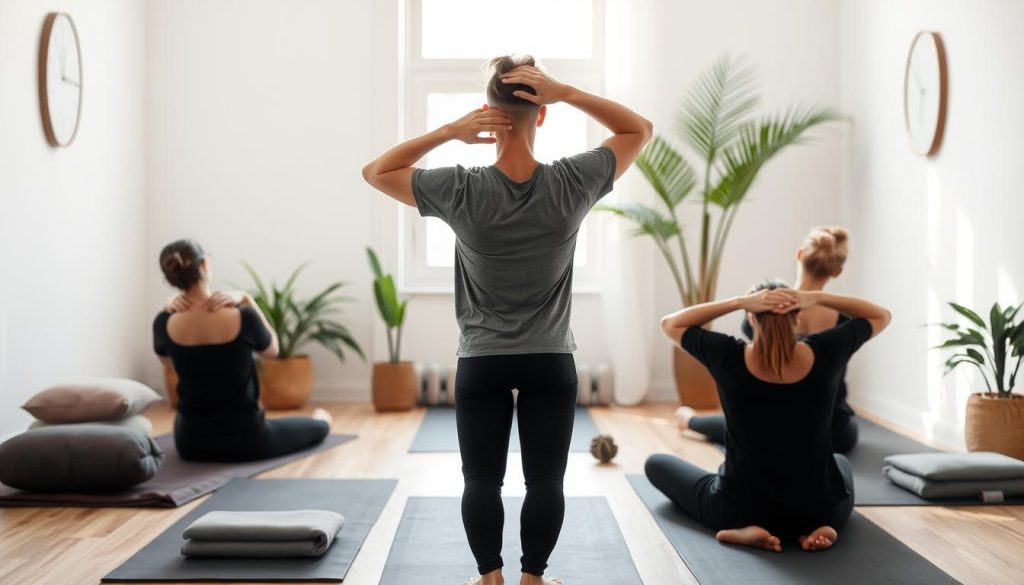
The thoracic extension is a great stretch to start with. You’ll need a sturdy chair or a foam roller for this. Place it at your mid-back and lean back gently, opening your chest and raising your arms overhead. Hold for 15-30 seconds to feel the stretch in your upper back.
The thread-the-needle stretch is another good choice. Start on all fours, with your hands under your shoulders and knees under your hips. Move your right arm under your left, with your palm up. Let your right shoulder drop to the ground as you rest your head on the floor. Hold for 20-30 seconds, then switch sides. This stretch helps relieve tension and boosts spinal mobility.
Standing wall angels are also helpful. Stand with your back against a wall, feet a few inches away, and knees slightly bent. Press your back, shoulders, and head into the wall. Then, raise your arms into a “Y” shape and lower them to a “W” shape. Repeat this several times, keeping in touch with the wall. This exercise strengthens your upper back, helping you stand up straight.
Adding these stretches to your daily routine can boost your flexibility and ease pain. It also helps keep your spine healthy.
How Yoga Can Help with Back Pain
Many people struggle with back pain. Adding yoga to your daily routine can help ease this discomfort. Yoga strengthens and stretches the muscles that support your spine. This improves flexibility and reduces pain.
Yoga offers a holistic approach to back pain. It doesn’t just focus on the pain. It works on the whole body’s alignment and balance, promoting healthier habits.
Specific poses like Cat-Cow and Child’s Pose stretch and lengthen the back muscles. They also improve circulation and ease tension.
Yoga also emphasizes a strong core for back pain relief. Poses like Plank and Bridge work the abdominal muscles. This supports the lower back and prevents future injuries.
Adding these yoga poses to your routine can greatly reduce back pain. It helps create a more balanced and flexible body. Yoga is a gentle yet effective way to care for your back, whether you have occasional or chronic pain.
Pilates Exercises for a Stronger Back
Pilates is great for back pain and boosting core strength. It focuses on movements that help prevent and treat back issues. Let’s explore how these exercises can help your spine.
Pilates for Back Pain
Pilates can greatly reduce back pain when done regularly. The exercises build strength without hurting your back. You’ll feel less pain and move better over time.
Pilates also strengthens your core. Your core includes your abs, pelvic floor, lower back, and obliques. A strong core supports your spine and prevents injuries. Regular Pilates makes these muscles stronger, giving you a solid base for all movements.
Spinal Alignment
Spinal alignment is key for back pain relief. Pilates teaches controlled movements and postures to align your spine. This improves your posture, balance, and overall health. You’ll feel more connected to your body as you practice.
Add Pilates to your workout routine for a stronger, pain-free back. With regular practice, you’ll see the benefits of Pilates for back pain, core strength, and spinal alignment.
Quick Recommendation: Our blog guides you through effective stretches and exercises for back pain relief. If you want to dive into the subject of back pain more comprehensively, we recommend The Back Pain SOS - eBook.
Strengthening Exercises for Back Pain Relief
Adding a back strengthening routine is key for muscle support and injury prevention. By focusing on muscle strengthening for back support, you can ease pain and protect against future discomfort. Here are some effective exercises for your fitness routine:
Start with planks. They’re great for building core strength, which is vital for back support. Begin by holding the plank for 20 seconds and increase the time as you get stronger.
Then, try bird-dog exercises. They target your lower back muscles and improve stability. Start on all fours, extend one arm and the opposite leg, and hold for a few seconds before switching sides.
Lastly, do bridges to strengthen your lower back and glutes. Lie on your back with knees bent and feet flat. Lift your hips towards the ceiling, hold for a few seconds, and then lower back down. Add these exercises to your weekly routine to prevent back injury and support long-term back health.
Posture and Back Pain Prevention
It’s important to know how good posture helps prevent back pain. Poor posture can cause back issues, from mild to severe pain.
Developing good posture habits is key to avoiding back pain. Be aware of your sitting, standing, and moving all day. Make sure your spine is straight and avoid slouching.
Adding ergonomic tips to your daily life can also boost your back health. Use a chair that fits your spine’s natural curve. Keep your feet on the floor and your computer screen at eye level. These small changes can make a big difference.
Don’t forget to stretch and move regularly to prevent back pain. Sitting or standing for too long can hurt your back muscles. Good posture habits keep your back healthy now and prevent pain later.
Using Foam Rollers for Back Relief
Chronic back pain can really get in the way of your daily life. Foam rolling is a simple yet effective way to ease this pain. It helps release tension in your back muscles.
Using a foam roller targets tight muscles and fascia. It gives you a deep tissue massage at home. Regular use can help break down knots and improve blood flow, leading to better muscle health.
To start, place the foam roller under your back. Slowly roll over it to find tight spots. Spend more time on these areas to release tension. Move slowly and listen to your body for the best results.
Adding foam rolling to your daily routine can lessen back pain. It helps keep your spine healthy. Making it a regular part of your routine is a great way to manage back pain.
When to See a Professional for Back Pain
Back pain can really mess up your day and life. It’s important to know when to get help. Mild pain might go away by itself, but some signs mean you should see a doctor or chiropractor.
If your back pain lasts more than a few weeks, you should get medical help. Pain that goes down your legs, numbness, or tingling are big red flags. These could mean you have a serious problem that needs a doctor’s care.
Also, if pain gets worse with movement, or you can’t stand, walk, or do everyday things, you might need physical therapy. A physical therapist can make a plan to help your pain and make your back stronger.
Getting hurt in an accident or falling is another reason to see a doctor right away. Getting help early can stop your back pain from becoming a long-term problem. It also helps you get better faster.
Preventative Measures for a Healthy Back
To keep your back healthy, making lifestyle changes is key. Simple daily habits can lead to big improvements. A mix of exercise, diet, and injury prevention is crucial.
Start with a regular exercise routine. Include strength training, stretching, and aerobic activities. These keep your muscles strong and flexible, easing back strain.
Your diet also matters a lot. Make sure you get enough calcium and vitamin D for strong bones. Eating right helps keep your spine healthy and your weight in check.
Don’t overlook injury prevention. Use proper lifting techniques, choose ergonomic furniture, and stay aware of your posture. These steps help avoid back pain before it starts.
By following these tips, you’re on the path to a healthy, pain-free back.
Conclusion
As we finish this guide on back pain relief, it’s clear that making some changes can help a lot. Understanding why we get back pain and doing stretches and exercises are key. Each step is important for long-term relief.
There are many ways to help your back, like stretching certain areas or doing yoga and Pilates. Using foam rollers can also help. Strengthening exercises and good posture are also crucial for a pain-free back.
If your back pain doesn’t go away or gets worse, seeing a professional is a smart move. Regular exercise and good posture are important for a healthy spine. By following this guide, you can find lasting relief and improve your life. This guide is your roadmap to a pain-free future, encouraging you to take care of your spine.
Quick Recommendation: Our blog guides you through effective stretches and exercises for back pain relief. If you want to dive into the subject of back pain more comprehensively, we recommend The Back Pain SOS - eBook.
Thanks for sharing. I read many of your blog posts, cool, your blog is very good.
Thank you so much. I really appreciate it. Kind regards, Mark.
Your point of view caught my eye and was very interesting. Thanks. I have a question for you.