
Are you worried that a plant-based diet might not provide all the protein you need? A well-planned vegan diet can offer all the essential amino acids your body requires. We’ll explore the diverse and rich array of protein-rich foods for vegans, reassuring you that vegan nutrition can easily meet your protein needs.
From the health benefits to the environmental advantages, there’s a lot to love about plant-based protein. Whether you’re new to veganism or a seasoned pro, understanding these protein sources will empower you to create balanced and nutritious meals. Ready to dive in?
Quick Recommendation: Our blog covers getting enough protein on a vegan diet. If you want a resource that will give you a more thorough understanding of a plant-based diet, we recommend the Vegan Diet EBook.
Why Protein is Important for Your Body
Protein is key for your body, helping with many important tasks. It’s especially good for muscle repair. This is true whether you’re an athlete or someone healing from an injury. Protein helps make muscles stronger and more durable.
Also, protein is vital for a strong immune system. Your body uses proteins to make antibodies and other immune factors. These protect you from infections and illnesses. Without enough protein, your immune system might weaken, leaving you open to health problems.
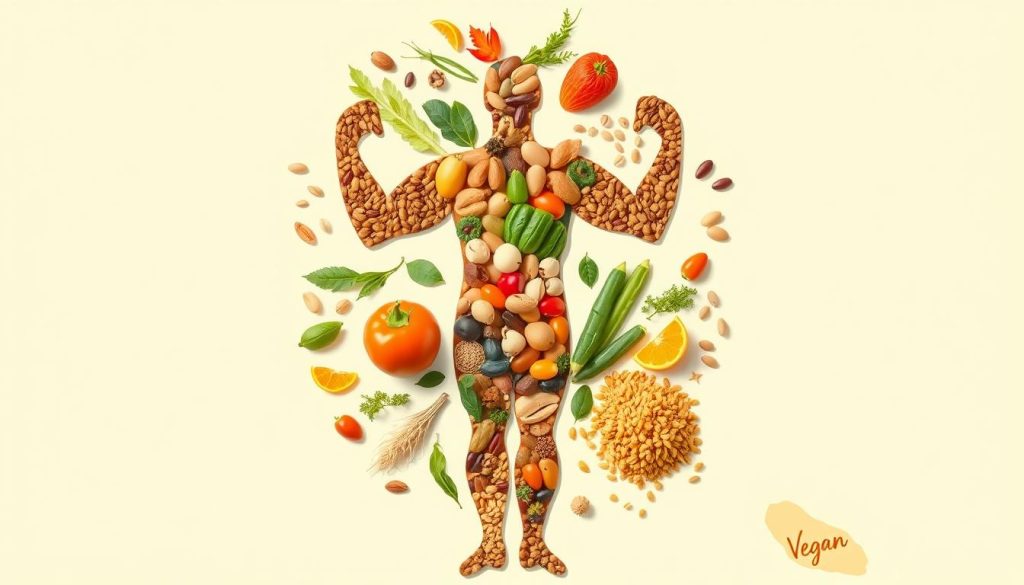
Many think vegan diets lack protein, but they’re wrong. Plants offer a wide range of protein sources. Foods like lentils, chickpeas, almonds, and quinoa can give you all the protein you need.
It’s time to clear up a common myth. Animal products aren’t the only source of protein. By eating a variety of plant-based proteins, you can support your body’s needs. This includes helping with muscle repair and keeping your immune system strong.
The Basics of Vegan Nutrition
Understanding vegan nutrition basics is key for a balanced diet. A good vegan diet has lots of whole plant foods. These foods give you all the nutrients you need.
Getting enough essential amino acids is important. These are protein building blocks your body can’t make. So, you must get them from food.
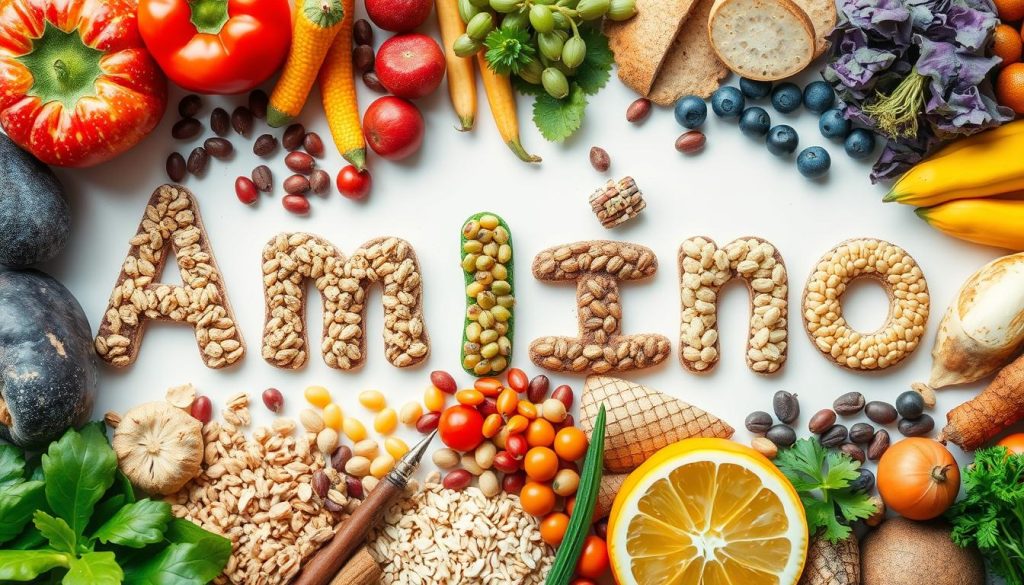
Beans, lentils, nuts, and seeds are great for protein. They have essential amino acids. Eating these foods helps meet your protein needs.
Following vegan dietary guidelines is also helpful. These guidelines suggest eating a variety of vegetables, fruits, grains, and legumes. This ensures a balanced diet.
Eating different plant proteins covers all essential amino acids. So, include many whole foods in your diet. This keeps your diet balanced and full of nutrients.
Legumes: Beans, Lentils, and Peas
Legumes like beans, lentils, and peas are great for a vegan diet. They have lots of protein, which is key for muscles and health. They also add many nutrients to your meals.
Beans are packed with protein, fiber, and vitamins. Adding black beans, kidney beans, and chickpeas to your meals boosts protein. Lentils, with up to 18 grams of protein per cup, also help control blood sugar and improve digestion.
Peas are often forgotten but are a big protein source. You can add split peas and green peas to soups, stews, and salads. They’re not just high in protein but also good for your heart by lowering bad cholesterol.
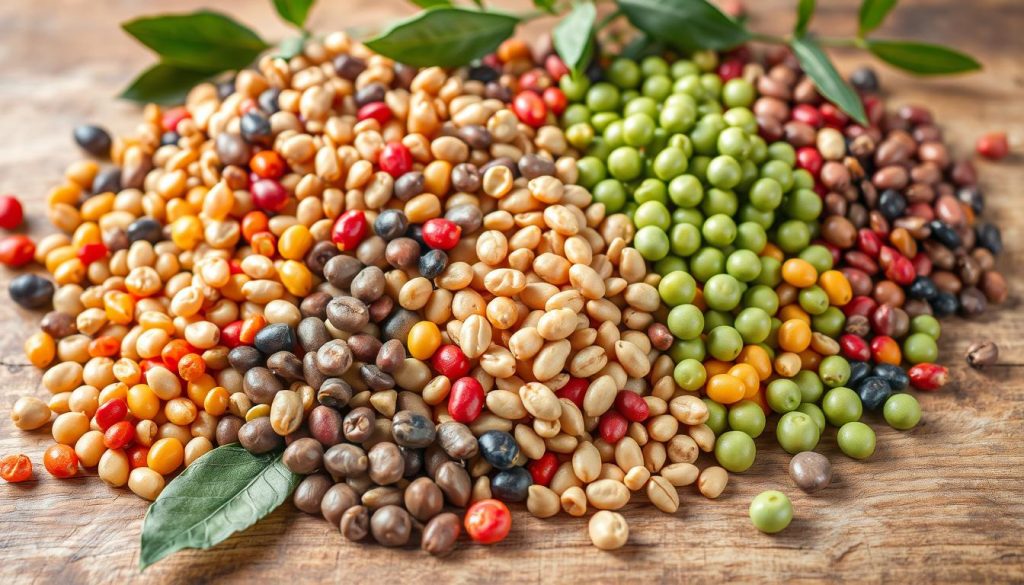
It’s simple to add legumes to your daily meals. You can put them in salads, soups, and even veggie burgers. Their protein content supports heart health and overall well-being.
Nuts and Seeds as Protein Powerhouses
Almonds, pistachios, and walnuts are top choices for high-protein nuts. They’re not just full of protein but also rich in omega-fatty acids and vitamins. Adding a small amount to your diet can greatly increase your protein without much work.
High-protein seeds like chia, flax, and hemp are also key. They offer a seed variety protein boost. For instance, chia seeds have about 4 grams of protein per ounce. Hemp seeds have a whopping 9.5 grams per tablespoon.
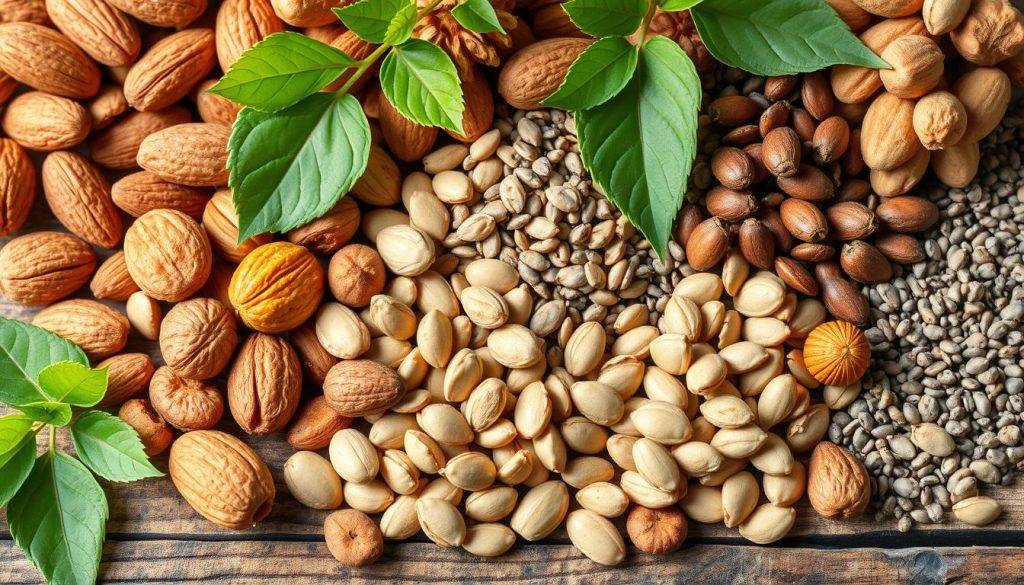
Remember, nuts and seeds are packed with nutrients but also calories. It’s crucial to control your portions. A little bit of seeds in a salad or a handful of nuts as a snack can be part of a healthy, vegan diet.
Tofu, Tempeh, and Edamame
If you follow a plant-based diet, soy products like tofu, tempeh, and edamame are great for protein. These foods are not only flexible but also full of nutrients. They help you meet your daily protein needs.
Tofu, also known as bean curd, is made from soy milk. It’s very versatile and can be used in many dishes. When picking tofu, choose non-GMO soy products for a healthier choice. Tofu is low in calories and rich in iron and calcium, making it a good choice.
Tempeh is another soy protein source, but it’s fermented. This makes it firm and nutty. The fermentation boosts its nutritional value and helps with digestion. For those avoiding GMOs, non-GMO soy products are available for tempeh too.
Edamame, or young soybeans, are great as a snack or in dishes. They’re full of protein, fiber, and healthy fats. Choosing non-GMO edamame means you get a cleaner product without genetic modifications.
Adding tofu, tempeh, and edamame to your meals can increase your protein intake. By picking non-GMO soy products and fermented foods, you improve flavor and health.
Grains and Pseudograins
Grains and pseudograins are key to a vegan diet, boosting your protein intake. Quinoa is a top choice for its high protein and versatility.
Quinoa stands out as it’s one of the few plant foods with complete proteins. It has all nine essential amino acids. This makes it great for getting balanced nutrients without animal products.
Farro, barley, and bulgur are also good for protein. Pairing them with legumes or nuts makes your meals even better. This helps you get a diet full of complete plant proteins.
Adding different grains and pseudograins to your diet is good for you. It makes your vegan diet more varied and satisfying. Try different mixes to meet your protein needs.
Quick Recommendation: Our blog covers getting enough protein on a vegan diet. If you want a resource that will give you a more thorough understanding of a plant-based diet, we recommend the Vegan Diet EBook.
Vegetables High in Protein
Vegetables are often seen as being full of vitamins and minerals. But, many are also packed with protein. This makes them key for a plant-based diet. Adding different veggies to your meals can increase your protein and nutrient intake.
Cruciferous veggies like broccoli, Brussels sprouts, and kale are top choices. They’re not just high in protein but also in fiber and vitamins A, C, and K. Leafy greens like spinach and Swiss chard are also great. Spinach is easy to add to salads, soups, or smoothies.
It’s important to eat a variety of veggies to get all the nutrients. Mixing cruciferous, leafy greens, and other protein-rich veggies is best. Kale is good in salads or smoothies, and broccoli is great in stir-fries or roasted dishes. Peas and asparagus are also protein-rich and add flavor to your meals.
Eating a variety of these veggies can help you get enough protein. They’re also low in calories but high in fiber. This helps with digestion and keeps you full longer. Make it a habit to include different protein-rich veggies in your meals for a balanced diet.
Fruits with Surprising Protein Content
Fruits aren’t the first thing that comes to mind when thinking of protein. But, there are fruits that offer surprising amounts of protein. Adding these fruits to your diet can help keep your macronutrient balance right, especially if you eat plants.
Avocados have about 3 grams of protein per cup. They’re not just full of healthy fats; they also add a lot of protein. Guava is another great choice, with over 4 grams of protein per cup. It’s a strong addition to a vegan diet.
Dragon fruit is known for its bright color and sweet taste. It has about 2 grams of protein per cup. Adding more dragon fruit to your diet can help meet your protein needs. Jackfruit is also popular, with around 2.8 grams of protein per cup.
Adding these fruits to smoothies, salads, or as snacks can boost your protein intake. It makes your diet more varied and keeps your macronutrients balanced. This supports your health and wellness on a plant-based diet.
Vegan Protein Powders: Pros and Cons
Vegan protein powders have many benefits, especially for convenience. They help meet your protein needs, especially if you’re always on the go or have dietary limits. With so many options, you can find one that fits your nutritional goals.
One big plus of plant-based protein powders is how versatile they are. You can mix them into smoothies, oatmeal, or even baked goods. This opens up more food choices for you. Plus, they often have fewer allergens than animal-based powders, making them safer for those with allergies.
But, not all vegan protein powders are the same. Always check the ingredients to avoid fillers or artificial stuff. Some might have added sugars or fake flavors, which can harm their health benefits. So, choose organic or minimally processed ones when you can.
Remember, vegan protein powders are just a supplement. Eating whole foods like legumes, nuts, and seeds is key for good nutrition. These powders should help, not replace, your diet.
In conclusion, plant-based protein powders can be great if you pick the right one. Think about your lifestyle and diet to see if they’re right for you.
Combining Foods for Complete Proteins
As a vegan, it’s key to know how to mix foods for all amino acids. By pairing foods right, you can meet your protein needs without animal products.
Complementary proteins come from mixing foods with different amino acid profiles. For instance, legumes with grains give you all essential amino acids. Rice and beans or hummus with whole-grain pita are great examples.
Being aware of food pairing helps you make nutritious meals. Try quinoa with black beans in a salad or lentils with barley in a stew. It’s about finding tasty ways to mix proteins for your health.
Reading Food Labels for Protein Content
Learning to read food labels is key for those aiming to meet their protein needs. Start by looking at the nutritional information panel on the back or side of the package. Here, you’ll find the protein content per serving size and other important nutrients.
The serving size is crucial because it shows the nutritional info for that amount. Make sure to compare the serving size listed to what you usually eat. If you eat more or less, adjust the protein percentage daily value accordingly.
Next, find the protein content in grams (g). This tells you how much protein is in one serving. You’ll also see the protein percentage daily value, showing how much of the daily protein intake this serving provides. Look for products with a higher protein percentage daily value to meet your nutrient goals.
Be careful of misleading claims on the front of the package, like “high protein” or “protein-packed.” Always check the nutritional information to confirm these claims. Some labels also show “per 100g” values, making it easier to compare protein content across products.
Knowing how to read food labels helps you make better dietary choices and manage your protein intake. This way, you’re fully aware of the nutritional benefits your food offers.
Meal Planning for Optimal Protein Intake
Planning a vegan diet can be easy and fun. With some vegan meal prep, you can hit your daily protein targets easily. Start by making a weekly menu with different protein-rich dishes you like.
Set aside a day for meal planning and prep. This keeps you on track and helps you use your groceries wisely. Include beans, lentils, tofu, and whole grains like quinoa and buckwheat. They’re all great for plant-based protein.
Another smart move is to prep versatile ingredients for various dishes. Cook big batches of quinoa or lentils. Then, use them in salads, bowls, or wraps. This saves time and keeps your protein intake steady.
Remember to add protein-rich snacks to your routine. Try roasted chickpeas, trail mix, or homemade protein bars. These snacks fill the gap between meals and keep your energy up.
In short, smart vegan meal prep is about variety, planning, and ease. With a good meal plan and a variety of protein-rich dishes, you can meet your protein needs and enjoy delicious meals.
Conclusion
A balanced vegan diet can give you all the protein you need from plants. You can get protein from legumes, nuts, seeds, grains, and some fruits and veggies. Adding tofu, tempeh, and vegan protein powders can make your meals even better.
Choosing sustainable protein sources is good for you and the planet. Veganism can improve your digestion, energy, and lower disease risks. It’s more than a diet; it’s a way to care for animals and the environment.
Why not explore the wide range of plant-based proteins? Whether you’re cooking or checking food labels, a vegan diet has many options. Embrace veganism for your health and the planet’s sake.
Quick Recommendation: Our blog covers getting enough protein on a vegan diet. If you want a resource that will give you a more thorough understanding of a plant-based diet, we recommend the Vegan Diet EBook.
Thank you for your sharing. I am worried that I lack creative ideas. It is your article that makes me full of hope. Thank you. But, I have a question, can you help me?