

Have you ever wondered how intermittent fasting could uniquely benefit your health as a woman?
Intermittent fasting is getting more popular, but finding the right way to do it can be hard for women. The benefits, like better metabolism and more energy, are tempting. Yet, women must think about special things that can really affect their success.
This guide is for women looking to try intermittent fasting. It focuses on healthy fasting practices that fit how women’s bodies work.
Understanding hormonal balance, metabolic health, and reproductive well-being is key. It can make a big difference. Are you ready to learn how to make intermittent fasting work best for women?
Quick Recommendation: Our blog covers intermittent fasting for women. In addition, if you want a comprehensive formula, we recommend the Intermittent Fasting Formula.
The Basics of Intermittent Fasting
Intermittent fasting is a flexible diet that fits many lifestyles. It involves alternating between eating and fasting. The goal is to find a pattern that works for you.
The 16/8 method is a common choice. You fast for 16 hours and eat in an 8-hour window. This lets you enjoy meals while fasting benefits.
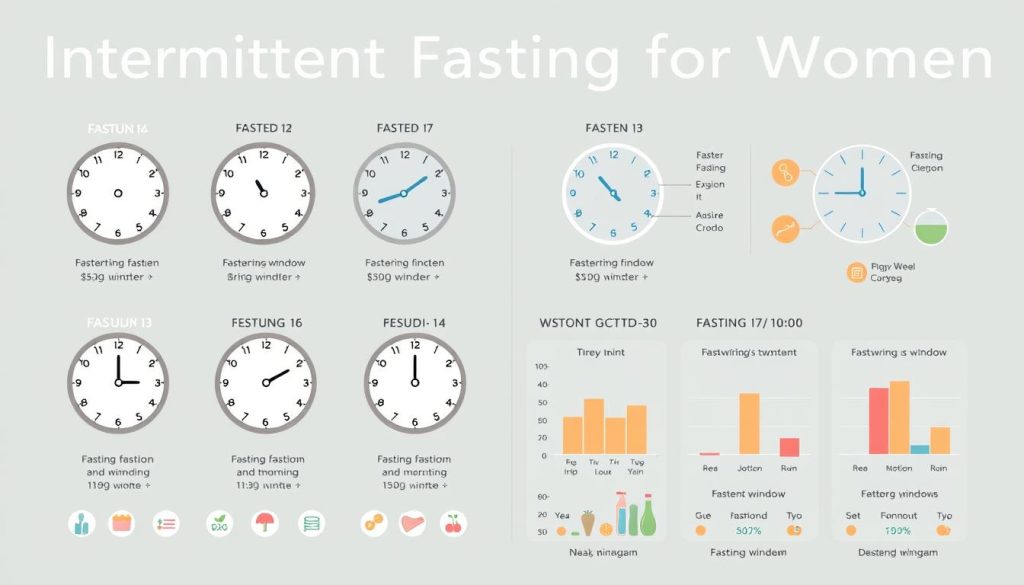
The 5:2 diet is another favorite. You eat normally for five days and limit calories to 500-600 on the other two. It’s a good start for beginners.
Alternate-day fasting is also popular. You fast one day and eat normally the next. On fasting days, you eat 500-600 calories. It’s intense but flexible.
Starting any fasting plan, listen to your body and adjust. Hunger may be strong at first but fades as you adapt. Knowing your goals, like weight loss or more energy, helps pick the right plan.
Understanding intermittent fasting basics is key before diving into specifics for women. Set your fasting schedules, find eating windows, and choose a plan that fits your life for success.
Hormonal Considerations for Women
Women should pay close attention to their hormones when fasting. The menstrual cycle plays a big role in how fasting affects the body. Changes in estrogen levels can impact energy, mood, and fasting’s effectiveness.
Fasting can also change estrogen and progesterone levels, which are important for reproductive health. This can affect fertility. Women might see changes in their menstrual cycle due to fasting’s impact on hormones.
It’s important to understand these hormonal changes when fasting. Knowing how your cycle and estrogen levels work can help you adjust your fasting plan. This way, you can keep your hormones balanced and improve your health.

Intermittent Fasting and Weight Loss for Women
Intermittent fasting can help women lose weight, but it’s key to understand how it works for you. It taps into your metabolism, which is different for women. This can lead to better fat loss when done right.
Fasting helps control calories and improves insulin sensitivity. This makes it easier to burn fat. But, it’s important to eat well to keep your metabolism and health up. Studies show it can help avoid weight loss plateaus, leading to steady progress.

Creating a calorie deficit is crucial, but don’t forget about vitamins and minerals. People who’ve tried it say staying hydrated, eating enough protein, and choosing whole foods are key. This makes intermittent fasting a lasting and effective way to lose fat.
Intermittent Fasting and Women’s Health
Intermittent fasting is becoming more popular for women’s health. It offers many benefits, like preventing chronic diseases and boosting mental clarity. It can also help you live longer.
By changing how you eat, intermittent fasting can lower the risk of diseases like Type 2 diabetes and heart disease. Studies show that women who fast intermittently have more stable blood sugar. This can help prevent these diseases.

Intermittent fasting also improves mental focus and energy. It gives your body time to repair and grow, which helps your brain work better. Many women feel more focused and productive when they fast.
It may also help you live longer by fixing cells and reducing inflammation. Giving your digestive system breaks can improve your health. Research shows it can slow down aging and increase longevity, making it great for women wanting to stay healthy and active.
Potential Risks and Precautions
Intermittent fasting can be beneficial, but it’s important to know the risks. One common issue is hypoglycemia, where blood sugar drops too low. Symptoms include dizziness, sweating, and confusion, so it’s key to watch how your body reacts.
For some women, fasting can lead to unhealthy eating habits. It’s crucial to fast mindfully to keep your eating habits healthy. If you start obsessing over food or feel guilty after eating, it’s time to rethink your fasting.
Fasting can also affect your mental health. It might make stress or anxiety worse. So, it’s important to check in with yourself often. If you notice your mood or mental health getting worse, talk to a healthcare professional about your fasting.
It’s also important to know when not to fast. Women who are pregnant or breastfeeding should avoid it because they need more nutrients. If you’ve had eating disorders or chronic health issues, talk to your doctor before starting a fasting plan.
In summary, knowing the risks and fasting mindfully can help you enjoy fasting’s benefits without harm. Always talk to a healthcare professional to make sure fasting is safe and right for you.
Quick Recommendation: Our blog covers intermittent fasting for women. In addition, if you want a comprehensive formula, we recommend the Intermittent Fasting Formula.
Intermittent Fasting for Different Life Stages
Starting intermittent fasting can have different effects at various life stages. For teens, it’s important to focus on their nutritional needs and growth. It’s vital to introduce fasting carefully, with guidance from health experts. Make sure their diet is balanced to support growth and school needs.
In the reproductive years, adjusting to fasting is key. It’s important to match your fasting with your menstrual cycle. This helps manage energy and hormonal changes. Staying in sync with your body can boost your health and metabolism.
When fasting in menopause, you need to consider hormonal changes. As estrogen levels drop, your body reacts differently. Adjusting your fasting can help with symptoms like weight gain and mood swings. Getting advice from a healthcare expert is crucial for a safe and effective fasting plan.
Understanding the differences in each life stage is crucial for fasting. Whether you’re a teen, in your reproductive years, or in menopause, adapting your fasting is essential. This way, you can enjoy the benefits while supporting your body’s changing needs.
Combining Intermittent Fasting with Exercise
Adding exercise to your intermittent fasting routine can boost your workout. But, you need to plan it right and listen to your body. A good fasting workout plan means timing your meals and workouts for the best results.
Think about when you should work out. Doing it during your fasting time, especially later, uses fat for energy. But, watch how your body feels. Some might feel tired if they’re low on energy. Adjusting how hard you work out can keep things balanced.
Drinking water is key when fasting. Drinking it before, during, and after exercise keeps you hydrated. This helps your energy and workout performance. Adding electrolytes is good for intense or long workouts.
What you eat before and after working out is important. Eating a small meal with protein and carbs before helps. It fills up your glycogen stores and gets you ready for a good workout. After, eat proteins and healthy fats to help your body recover and fix muscles.
By following these tips and listening to your body, you can find a good balance between fasting and exercise. Talk to fitness experts or nutritionists to make sure you’re fueling your body right for the best results.
Personalizing Your Fasting Plan
Intermittent fasting isn’t a one-size-fits-all deal. Making your fasting plan personal is key to reaching your health goals. Whether you want to lose weight, boost mental clarity, or get other health benefits, customize your fasting schedule.
Creating a fasting plan that fits your lifestyle and preferences is smart. Try out different fasting windows and meal times. Remember, your body knows best. Listen to how you feel and adjust your plan as needed.
It’s vital to listen to your body when setting up your fasting plan. If you feel tired, have headaches, or feel uncomfortable, it’s time to make changes. The goal is to make fasting a part of your life that you enjoy and that helps you reach your health goals.
Experts and success stories show that trying different fasting methods is important. Dr. Jason Fung, for example, stresses the need to understand your body’s needs. Don’t hesitate to experiment until you find what works for you. This journey will help you reach and keep your health goals with confidence.
Common Mistakes to Avoid
Starting an intermittent fasting journey is exciting, but there are pitfalls to watch out for. One big mistake is setting unrealistic goals. You might want quick results, but lasting success takes time and consistent effort.
Another mistake is not preparing well for fasting periods. Skipping meals without a plan can make you feel deprived and might lead to binge eating. To avoid this, plan your meals and choose foods that give you energy.
It’s important to listen to your body. Ignoring signs of tiredness or hunger can stop your progress. Start slowly and gradually get into fasting. Also, drink plenty of water and avoid just using caffeine to fight hunger.
By knowing and avoiding these mistakes, you can make fasting more enjoyable and effective. Remember, building sustainable habits and being realistic are crucial for success in intermittent fasting.
Supplements and Nutrient Needs
Intermittent fasting is great for health, but watch your nutrient intake to avoid deficiencies. It’s key to get essential vitamins for women in your diet. A balanced diet with lots of nutrient-dense foods is a good way to do this.
Minerals like calcium, iron, and magnesium are crucial for your body. Calcium helps bones, iron carries oxygen, and magnesium aids muscles and energy. Getting these through food or supplements is important for your health.
Supplements can help if your diet is lacking. Vitamin D is important, especially for those with little sun. Omega-3s and B vitamins support heart health and energy, respectively. Choosing high-quality supplements is vital for your fasting journey.
Eating a balanced diet with fruits, veggies, lean proteins, and whole grains helps a lot. But, talking to a healthcare provider about supplements can make a big difference. The aim is to get all the vitamins and minerals you need to stay healthy.
Conclusion
As you finish this guide, you know more about how intermittent fasting helps women. You’re ready to make better health choices. Starting intermittent fasting can improve your health, but do it carefully and for yourself.
We covered the basics, how it affects women’s hormones, and its role in weight loss. It’s key to make your fasting plan fit you. This way, you get the most benefits and avoid risks.
Starting your wellness journey? Always put your health first and talk to doctors about your fasting plan. Making smart choices and being mindful leads to a lasting, healthy lifestyle. Be confident and excited to reach your health goals.
Quick Recommendation: Our blog covers intermittent fasting for women. In addition, if you want a comprehensive formula, we recommend the Intermittent Fasting Formula.