

Ever thought about natural ways to fight inflammation instead of meds? You might be amazed to find out some herbs can really help. They can reduce inflammation and boost your health. Let’s dive into the best anti-inflammatory herbs to add to your meals. These natural remedies not only help with inflammation but also offer many health benefits.
Quick Recommendation: Our blog covers the top anti-inflammatory herbs you should add to your diet. If you want to explore the world of herbs more comprehensively, we recommend the Herbs for Health eBook.
Benefits of Adding Anti-Inflammatory Herbs to Your Diet
Adding anti-inflammatory herbs to your diet can greatly improve your health. They help fight inflammation naturally. This can reduce chronic pain and swelling, making your life more comfortable.
Herbs like turmeric, ginger, and garlic are known for their anti-inflammatory powers. They offer both quick relief and long-term health benefits.
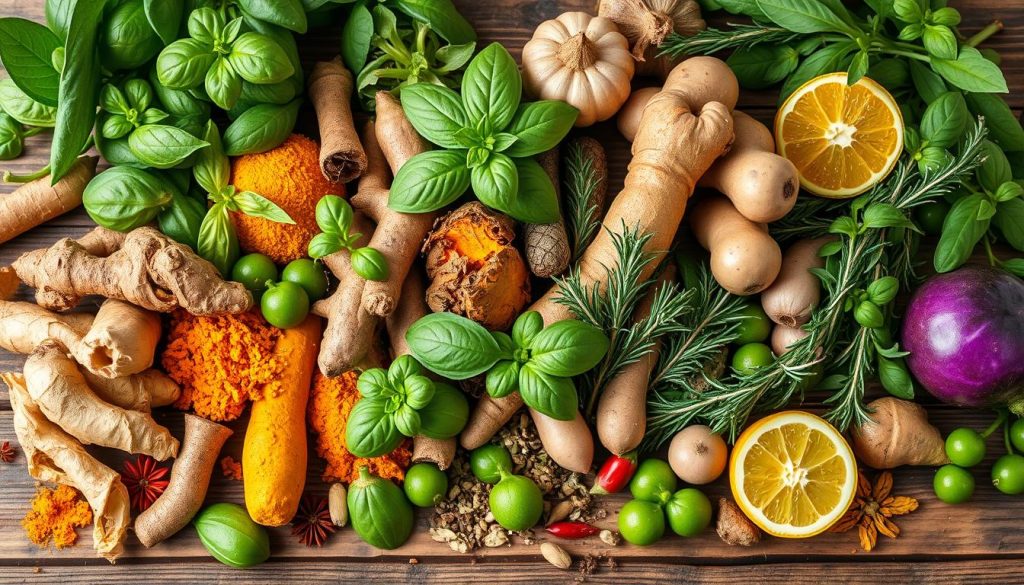
Another key benefit is preventing chronic diseases. Eating anti-inflammatory herbs regularly can lower the risk of heart disease, diabetes, and arthritis. These herbs are full of antioxidants that protect your cells and boost your immune system.
They also help your digestive health. Many anti-inflammatory herbs have digestive benefits, reducing bloating and improving nutrient absorption. They can also ease stomach discomfort and help manage stress, improving your mental health.
By choosing to include these herbs in your diet, you take a holistic approach to health. They can boost your immune function and lower your risk of chronic conditions. Anti-inflammatory herbs are a natural and effective way to improve your health.
Turmeric
Turmeric is a powerhouse against inflammation. Its key ingredient, curcumin, has strong anti-inflammatory and antioxidant effects. Adding turmeric to your diet can bring many health benefits.
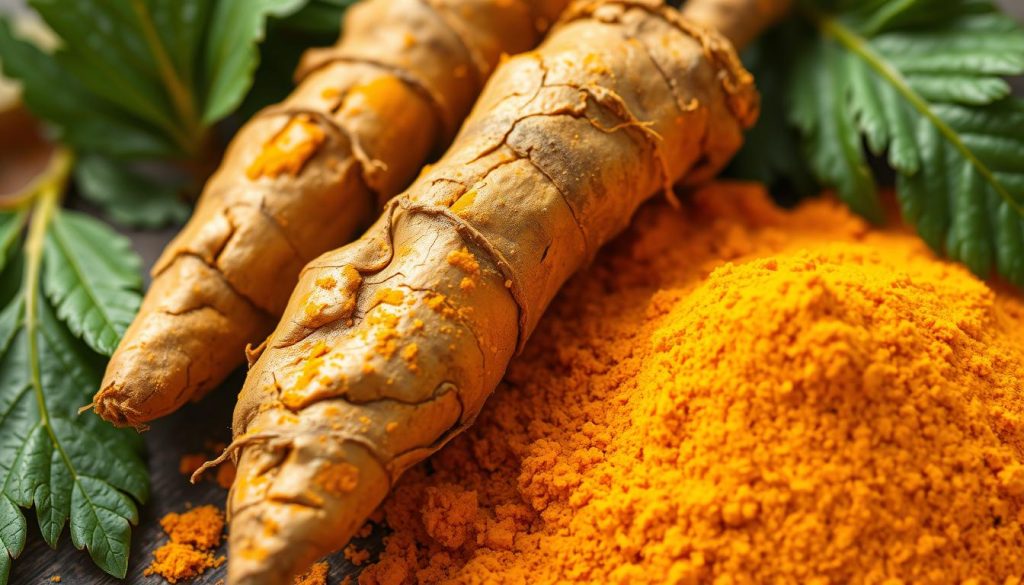
Curcumin is great for natural joint pain relief, especially for arthritis sufferers. Research shows it can cut down inflammation and ease pain. This makes it a good choice instead of regular painkillers.
It’s simple to add turmeric to your meals. You can mix it into soups, stews, and smoothies. To boost its effects, use black pepper. The piperine in black pepper makes curcumin absorption up to 2,000% better. This ensures you get the most from turmeric in your cooking.
Ginger
Ginger is a powerful herb known for its ginger anti-inflammatory effects. It contains a compound called gingerol. This root helps with digestive issues and muscle pain.
It’s also a natural nausea remedy. This makes ginger a favorite in many homes.

The ginger anti-inflammatory effects help with chronic inflammation. You can add fresh ginger to tea or use it in cooking. If you don’t like the taste, ginger supplements are available.
Ginger does more than fight inflammation. It’s great for nausea, especially during pregnancy or when you’re feeling seasick. You can add ginger to smoothies, soups, or even desserts. Its versatility makes it easy to include in your diet every day.
Green Tea
Green tea is known worldwide for its health benefits. A key part, EGCG, is a powerful anti-inflammatory. It helps reduce inflammation and protects your cells.
Green tea also boosts your metabolism. Drinking it regularly can help with weight management and increase energy. It may even fight cancer, making it a great diet addition.

To get the most from green tea, brew it fresh. This keeps its nutrients intact. Enjoy it hot or iced to see health improvements over time.
Rosemary
Adding rosemary to your diet can change your life for the better. It’s a strong anti-inflammatory seasoning that has been used for ages. It helps with pain and swelling.
The herb contains rosmarinic acid and carnosic acid. These compounds fight inflammation in the body.
Rosemary is also great for your brain. Studies show it can boost memory and focus. It’s more than just a spice; it’s a key to better health and mind.
It’s easy to add rosemary to your meals. You can season meats, add it to stews, or make infused oils. This herb makes any dish better and offers many health perks. Try using rosemary herbal remedy in your cooking for a healthier and sharper mind.
Quick Recommendation: Our blog covers the top anti-inflammatory herbs you should add to your diet. If you want to explore the world of herbs more comprehensively, we recommend the Herbs for Health eBook.
Cinnamon
Cinnamon is a well-known anti-inflammatory spice with many health benefits. It’s especially good for blood sugar regulation. The compounds in cinnamon can act like insulin, helping with glucose metabolism and diabetes management.
There are two main types of cinnamon: Ceylon and Cassia. Ceylon cinnamon is safer for daily use. Cassia has more coumarin, which can be harmful in big amounts. Adding small amounts of either type to your diet can bring many cinnamon health advantages.
Cinnamon also helps lower heart disease risk. This anti-inflammatory spice reduces bad cholesterol and triglycerides. Try cinnamon in your oatmeal, smoothies, or baked goods for its benefits.
In summary, knowing the differences between Ceylon and Cassia cinnamon can help you choose wisely for your health. Adding this anti-inflammatory spice to your meals is a tasty way to boost flavor and health.
Garlic
Garlic is a real fighter against inflammation. Its main compound, allicin, has many health benefits. It can help fight off diseases and boost your immune system.
Garlic’s main strength is its ability to reduce inflammation. Allicin has antibacterial and antiviral powers. It helps tackle various diseases.
To get the most out of garlic, use it right. Crush or chop it and let it sit for a few minutes before cooking. This activates its good stuff.
Add garlic to sauces, dressings, or dishes towards the end of cooking. This keeps its allicin content strong. It helps support your immune system.
How to Use Anti-Inflammatory Herbs Safely
Start by adding anti-inflammatory herbs to your daily routine carefully. Begin with small amounts to see how your body reacts. Then, slowly increase the dosage while watching for any negative effects.
It’s crucial to talk to your doctor before using new herbs. They can give you advice based on your health and what you’re already taking. This helps avoid bad reactions and ensures your diet works well with your treatments.
Make sure to follow the recommended amounts for each herb. Turmeric and ginger are strong, but too much can upset your stomach. Sticking to the right amounts lets you enjoy their benefits safely.
Conclusion
Adding anti-inflammatory herbs like turmeric, ginger, and green tea to your meals can greatly improve your health. These herbs are not only tasty but also help fight inflammation. By using them, you can start a journey towards better health and energy.
Turmeric, with its earthy taste, is packed with curcumin. Ginger, used in teas or meals, is also great for fighting inflammation. Green tea and rosemary add antioxidants and help reduce swelling. Cinnamon and garlic, common in your kitchen, also boost your body’s defenses.
Using these herbs in your daily meals is a smart health move. It’s a way to live a healthier, longer life. You don’t need to make big changes. Just small, regular steps can make a big difference. Try out these herbs and enjoy their flavors and health benefits.
Quick Recommendation: Our blog covers the top anti-inflammatory herbs you should add to your diet. If you want to explore the world of herbs more comprehensively, we recommend the Herbs for Health eBook.